
Project Overview
Hunter syndrome disease awareness included patient journeys, infographic animation and interviews with patients and carers.
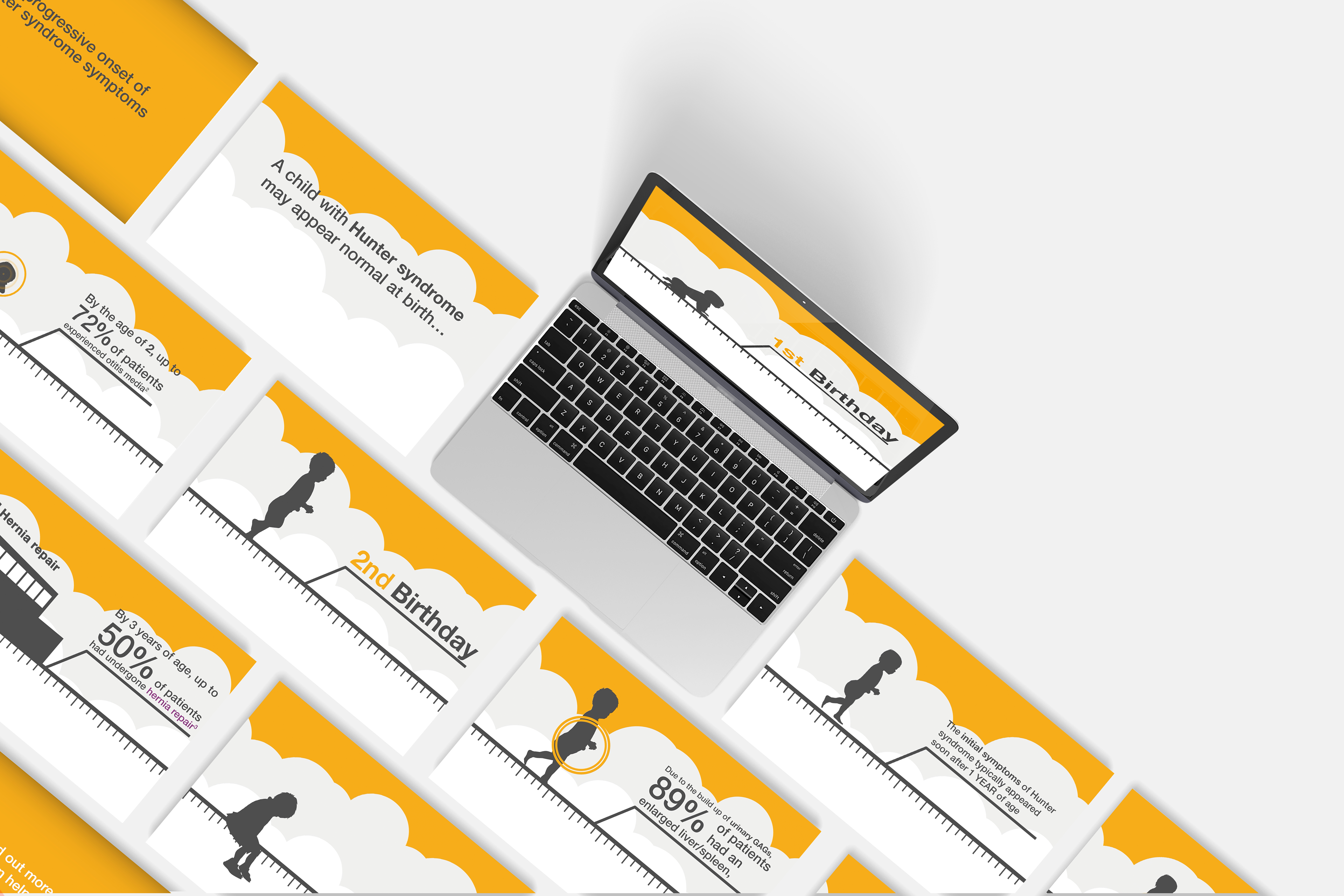
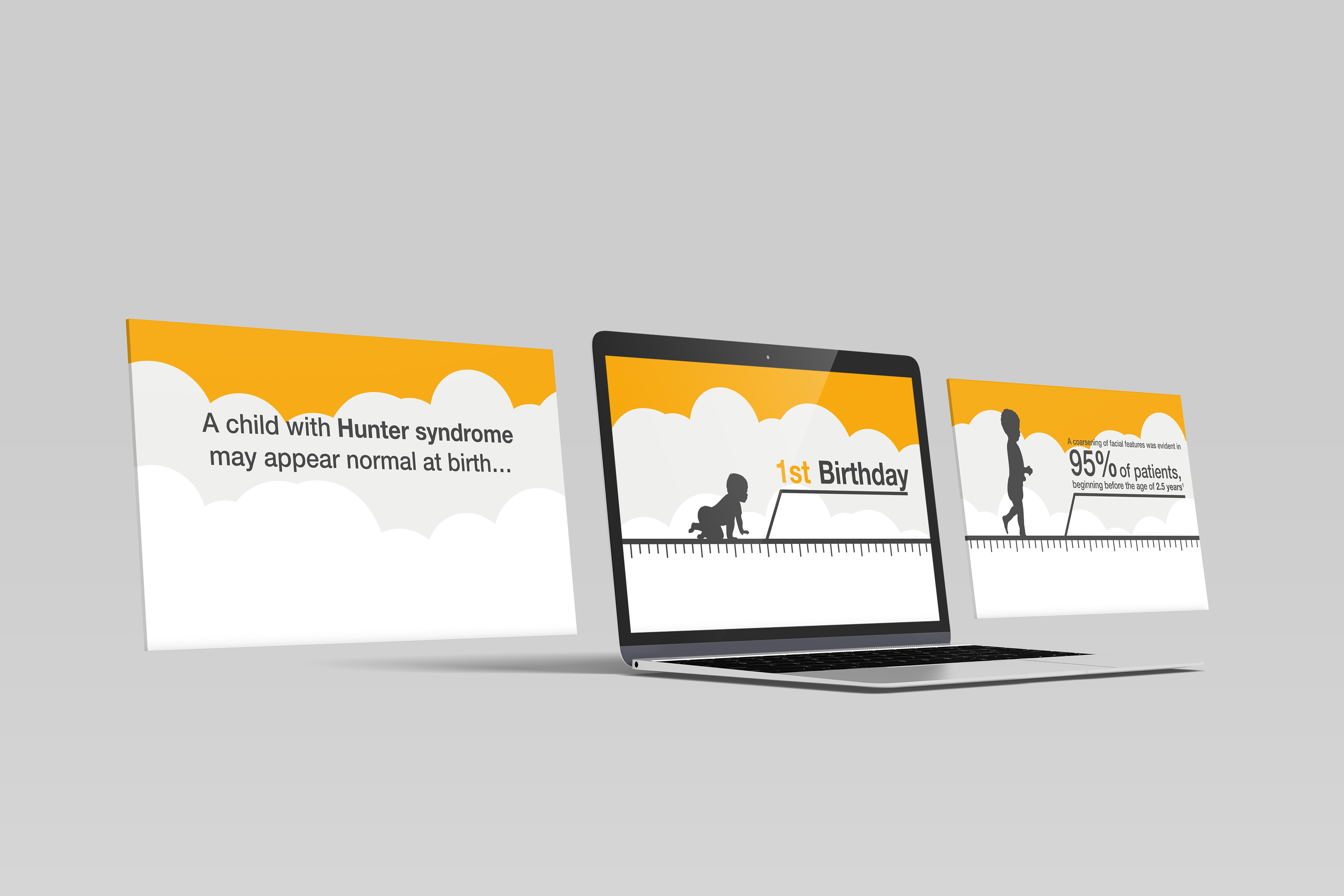
This animation, crafted for educating GPs begins at birth and progresses along a timeline with the child’s medical record below. Ages (with prevalence) at which symptoms typically appear will be displayed on signposts that the animated child passes on their journey through life.
Symptoms will accumulate on the patient’s medical record, representing the clustering of symptoms over time.
The long form animation included photographic images of the same child with Hunter syndrome at different ages to highlight the visible symptoms of Hunter syndrome.
The Challenges
Explaining a Complex Disease Clearly: Communicating the progression of Hunter syndrome in a way that’s understandable and impactful for a GP audience.
Visualising the Patient Journey: Creating an animation that effectively shows symptom onset and progression along a timeline, while keeping the narrative engaging.
Representing Symptom Clustering: Showing how symptoms accumulate over time in a way that’s visually clear and medically accurate.
Balancing Emotion and Education: Incorporating real interviews and imagery of a child with Hunter syndrome across different ages required sensitivity and care.
Maintaining Visual Consistency: Combining animated elements with real photographic images without disrupting the visual flow of the animation.
Targeting the Right Audience: Ensuring the content, pacing, and style were appropriate for educating general practitioners, who may not be familiar with rare diseases.
Our Solution
We developed a comprehensive disease awareness campaign for Hunter syndrome, which included patient journey narratives, an infographic-style animation, and interviews with patients and carers. The animation, designed specifically to educate GPs, began at birth and followed the child’s journey through life along a visual timeline. Signposts displayed the typical ages and prevalence of symptom onset, while symptoms accumulated on a medical record shown beneath the timeline to illustrate the clustering effect over time.
To enhance emotional impact and clinical understanding, we incorporated photographic images of the same child with Hunter syndrome at different ages, highlighting visible changes and progression of the disease. The final piece successfully combined medical accuracy with storytelling to raise awareness among healthcare professionals.